Foundations Course · Required Prerequisite · Wise Techniques Certification

Master
Cranial Laser
Reflex Technique

⚑ Legacy Edition CLRT 2.0 — a fully revised course — is coming soon

The required prerequisite for the Wise Techniques Certification Ladder. Complete the Foundations course, pass the written exam, and you are cleared for Level I Practitioner Certification. This is where the ladder starts — and it starts here for $497.

Enroll Now →
$1,495 $497 One-time · lifetime access
Dr. Nick Wise
Dr. Nicholas A. Wise
DC, MSCR
Developer of CLRT
NIH T-32 Research Fellow
UNC — Chapel Hill
CCI → Trigeminal Nerve → TCC → Cerebellum → State Variables → Mechanical Output → Feedback → CCI → Trigeminal Nerve → TCC → Cerebellum → State Variables → Mechanical Output → Feedback

What is CLRT?

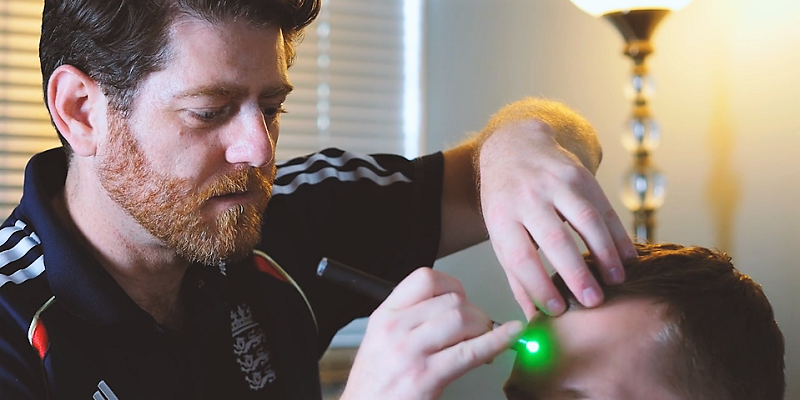
Cranial Laser Reflex Technique (CLRT) is a precision-based neuromuscular treatment method developed by Dr. Nicholas Wise in 2006. It uses low-level laser stimulation applied to specific cranial landmarks and directional vectors to influence muscle tone, myofascial trigger points, postural compensation, and persistent pain.

Unlike conventional approaches that focus primarily on the painful tissue, CLRT targets the nervous system's control of that tissue. Using real-time muscle response testing, practitioners identify specific cranial locations and stimulation directions associated with altered neuromuscular function. Clinically, these interventions can produce strikingly rapid changes in muscle tension, tenderness, strength, and range of motion — usually within seconds.

The central question behind CLRT is deceptively simple: What if persistent muscle dysfunction is not primarily a problem with the muscle, but with the nervous system's instructions to it?

CLRT's emerging theoretical framework draws on cerebellar neuroscience, predictive motor control, and somatotopic organization. The cerebellum continuously predicts and coordinates movement, regulates muscle activity, and helps maintain the body's orientation in space. When these internal estimates become biased or poorly calibrated, the nervous system may perpetuate protective muscle activity and postural compensations long after the original disturbance has passed.

CLRT proposes that specific cranial sensory inputs can influence these distributed control networks, potentially allowing the nervous system to reorganize dysfunctional patterns rather than simply suppress their symptoms.

Developed through nearly two decades of clinical observation and refinement, CLRT has been taught to hundreds of practitioners internationally. Its clinical findings have inspired an expanding research framework connecting hands-on neuromuscular assessment with contemporary neuroscience.

The goal is not simply to relax a muscle. It is to understand — and potentially change — the control strategy keeping that muscle dysfunctional.

Read: The Science Behind CLRT → Cranial maps · cerebellar model · emerging research

Watch the course trailer

A complete clinical framework —
from theory to treatment table

01
Foundations of CLRT
The scientific basis of cranial reflex pathways, how to select and use a low-level laser, safety protocols, and essential cranial landmarks.
02
CRP Breakdown by Region
Dozens of individual muscles covered head to toe — each with its Cranial Reflex Pathway, 3D anatomical animations, and expert narration.
03
CLRT in Practice
12 complete real patient case studies — from first contact to resolution — so you can watch the technique work start-to-finish before you try it yourself.

62 lessons across 7 modules

What others are saying

"I have attended countless workshops and seminars in my 11 years of practice — this ranks at the top in terms of results and ease of implementation. Over the years there are certain gems I have picked up along the way. This one is a diamond."
Dr. Rob Neposlan, DC · Canada
"I have been using CLRT for about 3 weeks now and I have three words for you: AMAZING AMAZING AMAZING. I thought it was too good to be true — well, who knew you could release tension in muscles by pointing a laser at the head. I have witnessed muscles melting before my eyes."
Tienus Brand, LMT · Toronto, Canada
"My results used to average around 85% success rate for approximately 11 years of clinical practice. I would now suggest that figure is closer to 95%. Out of the couple of hundred folk I have treated using CLR, I have never not had a positive result."
Robert Monro, DC · Brisbane, Australia
"The package arrived and I am amazed at the results. Yesterday I tried it on 5 patients and all of them improved drastically — results without having even seen the DVD! My own arm and neck have never felt better. This is truly revolutionary."
Joanna van der Bolt, Laser Therapist · Tilburg, Netherlands
"I got the laser yesterday and tried it on my wife, who had major knee pain including Patellar Tendonitis and tight IT Bands. Within a minute, she told me the pain was 95% gone. She couldn't believe it. I am psyched to start using it in practice."
Dr. Jamie DiMattia, DC · Princeton, NJ
"Dr. Nick Wise used his Cranial Laser Release technique on me and I noticed less tenderness and improved range-of-motion within seconds. I have dealt with this shoulder issue for years from playing a one-sided sport, lifting weights, and adjusting patients. It was truly amazing."
Dr. Gabriel O'Sullivan, DC · Spartanburg, SC
"It is a valuable tool that I use daily in the practice, at home, and even on the golf course. I use it so often it is difficult to narrow down the most dramatic results because there have been so many occurrences to recall them all."
Jay M. Erickson, DC · Athens, GA
Attended a seminar or completed the course? Share your experience →

Nicholas A. Wise, DC, MSCR

Dr. Nick Wise

Dr. Nick Wise developed Cranial Laser Reflex Technique in 2006 and has since used it with thousands of patients in his private chiropractic practice. He has taught hundreds of practitioners worldwide through live workshops and video training, and has presented CLRT at national and international conferences on chiropractic, photobiomodulation, and complementary medicine.

First chiropractor awarded the T-32 NIH Research Fellowship at the University of North Carolina — Chapel Hill
Former Science Chair, North American Association for Photobiomodulation Therapy (NAALT)
Former Adjunct Faculty, Program on Integrative Medicine, UNC–Chapel Hill
Former Assistant Professor, Department of Chiropractic Sciences, University of Western States
Presented at global conferences on chiropractic, photobiomodulation, and CAM

Get started today

A note from Dr. Wise

This course is the required entry point into the Wise Techniques Certification Ladder. It was originally recorded in 2018 and is being updated to reflect the current model. The technique it teaches is real, clinically effective, and used in practice daily. Complete it, pass the written exam, and you are ready for Level I Practitioner Certification — where live training begins. Enrolling now locks in the Foundations price and grants early-adopter access to all future updates.

Available Now
Foundations · Standalone
$497
Was $1,495
✓62 video lessons · 7 modules
✓12 patient case studies
✓Lifetime access
✓Written exam access
✕Does not include seminar or certification
Enroll in Foundations →
$497 credit toward Level I Bundle
Best Value
Level I · Full Bundle
$1,497
Everything included
✓Foundations course included
✓Written exam access
✓Level I live seminar
✓Practitioner Certification
✓Directory listing as Certified Practitioner
Enroll in Level I Bundle →
Already bought Foundations? Pay $1,000 for seminar
Coming Soon
Full Certification Ladder
Level II, III + Faculty

The complete pathway from Practitioner to Master to Faculty. Each level built on the last. Announced once Level I cohort is certified.

Level II — Advanced~$3,500–6,000
Level III — Master~$7,500–12,000+
Faculty StatusInvitation only
Notify me when Level II opens
Already purchased Foundations? Your $497 counts as a credit toward the Level I Bundle — pay just $1,000 for the seminar component ($1,497 − $497).
Contact us to apply credit →
Live & In-Person Training · Wise Techniques

CLRT Live
Seminars & Workshops

Train directly with Dr. Nick Wise. Live seminars go deeper than any video course — hands-on technique, real-time feedback, and clinical cases worked in the room.

No events currently scheduled — announcements coming soon
Be first to know when events are announced
Seminars sell out fast. Get on the list.

Hands-on training with the developer of CLRT

01
Live Technique Training
Work directly with Dr. Wise and trained assistants. Practice CRPs on real participants with immediate feedback on technique, pressure, and direction.
02
Real Patient Cases
Watch Dr. Wise work with patients in real time — zero Point Calibration, Posterior Line assessment, and full clinical sequences with live commentary.
03
Q&A and Integration
Bring your hardest clinical cases. Dedicated time for questions, troubleshooting, and how to integrate CLRT with your existing approach.

Nothing scheduled yet

Dr. Wise conducts in-person workshops and seminars periodically in the US and internationally. Sign up above to be notified as soon as dates and locations are confirmed.

TBD
—
2025
Workshop · Location TBD
CLRT Live — Full Day Workshop

Foundations through advanced clinical application. Open to all licensed practitioners.

Registration opens when announced
Example of how events will appear once scheduled

About live training

Who are the seminars for?
Licensed practitioners — chiropractors, physical therapists, massage therapists, acupuncturists, osteopaths, and other bodywork professionals. No prior CLRT experience required for introductory workshops.
Do I need the online course first?
Not required, but strongly recommended. The virtual course gives you a foundation that makes live training significantly more productive. Combination packages will be available.
Will CEUs be available?
We are working on CEU approval for several state boards. Details will be included with each event announcement.
How do I stay updated?
Sign up for the notification list above. Event announcements go to that list first, usually before social media or the website.
CLRT Virtual Training

Welcome back to the course.

Access all 62 lessons, case studies, and course materials from any device, any time.

▶62 video lessons across 7 modules
◎12 full patient case studies
◈3D anatomical animations
∞Lifetime access · all future updates
Sign in

We'll email you a secure link — no password needed.

How to Perform CLRT
Introduction · 17:52
How to Perform CLRT
Introduction · Lesson 5 of 7
Wise Techniques Admin
Signed in as admin
Course
▶Lessons
Members
🔑Grant Access
◎All Students
Business
$Sales
System
◈Settings
All Lessons
62 lessons across 7 modules. Video URLs will be wired to Bunny.net.
ModuleLesson TitleDurationStatusActions
Grant Access
Give a student free access to the Foundations course — no payment required. Use for beta testers, colleagues, comps, and staff.
Grant Foundations course access
The student will be added to your roster with the access type you choose. You can revoke at any time from the All Students tab.
Recently granted
NameEmailTypeGranted byDateNoteActions
All Students
Everyone with active course access — paid and comped. Connects to Supabase when live.
No student data yet — this panel will populate once Supabase auth is connected.
Sales
Revenue dashboard — connects to Stripe when live.
Sales data will appear here once Stripe is connected.
Settings
Platform configuration.
Admin login
Change the admin password. In production this is managed through Supabase role-based auth.
About Dr. Nick Wise

The story behind
CLRT

From a moment of clinical curiosity in front of a room full of skeptical MDs, to a technique taught to hundreds of practitioners worldwide. This is how CLRT came to be.

Dr. Nick Wise

How CLRT was born

Dr. Nick Wise developed Cranial Laser Reflex Technique in 2006 — not in a laboratory, but in a clinical setting, in front of an audience of skeptical physicians. That first moment of putting a laser to someone's head and watching the immediate physiological response was, by his own account, the beginning of everything.

What started as an observation — that precise, directed input to cranial reflex points produced immediate, measurable changes in muscle tone, pain, and range of motion — became two decades of clinical refinement, research, and teaching.

The model has evolved considerably since 2006. The current framework — built around the CCI, Trigeminal Nerve, TCC, and Cerebellum as a control system — represents the most coherent and clinically powerful version of CLRT to date.

Background & training

Doctor of Chiropractic (DC) — second-generation chiropractor, originally from Spartanburg, SC
Master of Science in Clinical Research (MSCR) — University of North Carolina at Chapel Hill
First chiropractor awarded the T-32 NIH Postdoctoral Research Fellowship at UNC-Chapel Hill
Former Science Chair, North American Association for Photobiomodulation Therapy (NAALT)
Former Assistant Professor, Department of Chiropractic Sciences, University of Western States
Former Adjunct Faculty, Program on Integrative Medicine, UNC-Chapel Hill
Co-founded first full-time chiropractic clinics in Ahmedabad, India (2010)
Instrumental in establishing legal recognition of chiropractic in India

Areas of focus

01
Photobiomodulation & the brain
Understanding how low-level laser therapy affects brain mechanisms, stress response, pain processing, and functional neurology. Presented at NAALT, WFC, and international CAM conferences.
02
Cranial reflex pathways
The anatomical and neurological basis for cranial reflex maps — how input at the cranial boundary propagates through the trigeminal system and modulates global motor output.
03
Control system models in clinical practice
Applying predictive processing and control theory to manual and laser therapy — treating the nervous system as a state estimator rather than a passive receiver of mechanical input.

Conferences & presentations

International
World Federation of Chiropractic
NAALT Annual Conference
Indian Chiropractic Association
Global PBM Summit
Academic
UNC Program on Integrative Medicine
University of Western States
ACA Annual Conference
State Chiropractic Associations
Invite Dr. Wise
Available for conferences, grand rounds, CE seminars, and institutional workshops.
Get in touch →
Ready to learn?

Start with the course

The most comprehensive introduction to CLRT available anywhere. Legacy pricing while it lasts.

Enroll for $497 →
The Science

The Science Behind
CLRT

An exploration of cranial maps, cerebellar predictive control, and the emerging research framework behind Cranial Laser Reflex Technique.

Cerebellar Model Cranial Maps Emerging Research
01 — Foundation

The Cerebellar Predictive Model

Contemporary neuroscience increasingly describes the cerebellum not as a simple motor coordinator, but as a sophisticated predictive control system. The cerebellum builds and continuously updates internal models of the body — anticipatory simulations of how muscles and joints will respond to intended movements before they occur.

These internal models allow the nervous system to issue preemptive motor commands rather than relying solely on reactive feedback. When a movement unfolds, the cerebellum compares its prediction against the actual sensory result — a process sometimes called forward model computation. Errors in this comparison drive learning and adaptation.

CLRT's working hypothesis is that certain patterns of chronic muscle dysfunction reflect an error in the cerebellar model itself — not a pathology of the muscle tissue, but a learned or acquired miscalibration in the control signal.

If the model is wrong, the output will be wrong — persistently, predictably, and independently of how much the muscle is stretched, strengthened, or massaged. Correcting the model, rather than the muscle, becomes the therapeutic target.

02 — Mechanism

Somatotopic Cranial Maps

The skull is not simply a protective shell. Research in cranial osteopathy, neural therapy, and reflex-based manual medicine has long pointed to the existence of functionally organized sensory regions on the cranium — zones whose stimulation produces reproducible, distant effects on musculoskeletal function.

CLRT works with a clinical map of these cranial zones, refined through nearly two decades of practice. Specific regions correspond — not necessarily anatomically, but functionally — to specific muscles and movement patterns throughout the body. Applying low-level laser to the appropriate cranial point produces an immediate, testable change in the target muscle's neurological readiness.

The mechanism is not fully understood. Leading working hypotheses include:

  • → Stimulation of cutaneous mechanoreceptors that feed directly into brainstem and cerebellar circuits
  • → Photobiomodulation of cranial nerve endings, altering afferent signaling
  • → Influence on connective tissue piezoelectricity and fascial tensegrity networks
  • → Disruption of standing-wave interference patterns in distributed neural circuits

What is observed clinically — and what the course teaches practitioners to test — is that the muscle response is rapid, specific, and repeatable. The predictability is itself the evidence the mechanism is real, even where the neuroscience remains incomplete.

03 — The Technique

The Reflex Arc: Find, Treat, Test

CLRT is organized around a three-step clinical cycle that can be completed in seconds:

Step 1 — Find

"Which muscle is inhibited, and what is its cranial point?"

Manual muscle testing identifies the dysfunctional muscle. Cross-referencing with the CLRT cranial map identifies the corresponding treatment point. This step is entirely assessment — no treatment applied yet.

Step 2 — Treat

"Apply low-level laser to the cranial point."

A brief application — seconds, not minutes — to the identified cranial zone. The laser parameters matter less than the location. The treatment is precise, painless, and non-invasive.

Step 3 — Test

"Did the muscle change?"

Immediate retest of the original muscle. In a successful intervention, the previously weak muscle tests strong — within the same breath. The test is the proof. If nothing changed, the assessment was wrong, and the cycle begins again.

This cycle is repeatable across a full session. A practitioner might complete 10–20 such cycles in a single appointment, systematically addressing each dysfunctional muscle and its corresponding cranial input.

04 — Research

Emerging Research & Clinical Evidence

CLRT sits at an intersection of well-established neuroscience and clinical observation that outpaces current research. The cerebellar predictive control model is robust and widely cited. Photobiomodulation research is rapidly maturing. Reflex-based musculoskeletal techniques have documented clinical outcomes across multiple modalities.

What does not yet exist is a controlled trial of CLRT itself. Dr. Wise is candid about this. The technique has been developed through approximately 20 years of clinical observation, pattern recognition, and iterative refinement across hundreds of practitioners and thousands of patients — but the formal research infrastructure that would generate RCT-level evidence has not been built.

The honest position is this: the clinical results are compelling, the theoretical scaffolding is coherent, and the mechanism is biologically plausible. The technique deserves rigorous investigation. That investigation hasn't happened yet.

Practitioners learning CLRT are encouraged to think of themselves as participant-researchers — testing the technique rigorously against their own clinical outcomes, documenting what they observe, and contributing to an emerging evidence base. The course trains this scientific orientation alongside the technical skills.

Related literature
  • Wolpert, D.M. et al. — Internal models in the cerebellum. Trends in Cognitive Sciences, 1998
  • Tseng, Y.W. et al. — Sensorimotor adaptation and cerebellum. Journal of Neurophysiology, 2007
  • Hamblin, M.R. — Mechanisms of low-level light therapy. SPIE, 2008
  • Chow, R.T. et al. — Photobiomodulation and pain: systematic review. Lancet, 2009
  • Upledger, J.E. — CranioSacral Therapy: Touchstone for Natural Healing, 1999
Learn the technique

Ready to learn CLRT?

The course covers the full clinical application, every cranial map, and the diagnostic reasoning behind each intervention.

Enroll for $497 → ← Back to course
Online · Live & Recorded

CLRT Webinars

Deep dives on specific topics — clinical protocols, the new model, case reviews, Q&A. Attend live or watch the recording. Free and paid options.

First webinar series launching soon — sign up to be notified
Get notified when webinars go live
Free recordings available to all subscribers

What's planned

TBD
—
Webinar 01 · Free
Introduction to Zero Point Calibration
The ZPC framework — what it tests, why it works, and how to use it as your primary assessment tool.
TBD
—
Webinar 02 · Free
Posterior Line State Management
Converge → Reverse → Bifurcate → Disperse. The four states, when to use each, and how directionality changes everything.
TBD
—
Webinar 03 · Paid · $49
Clinical Case Review — Live
Submit your toughest cases. Dr. Wise works through them live with the new model. Small group, interactive.

Past webinars

No recordings yet
Past webinar recordings will appear here after the first session. Free recordings for subscribers, paid for others.
Articles · White Papers · Clinical Notes

The CLRT Resource Library

Clinical frameworks, research summaries, protocol documentation, and conceptual deep-dives. Free to read, free to share with colleagues.

Suggest a topic

What do you want Dr. Wise to write about?

Clinical questions, conceptual gaps, protocol requests — the library grows based on what practitioners actually need.

Framework

Article Title

Dr. Nicholas A. Wise, DC, MSCR · 2026 · 5 min read
Get in touch

Let's talk.

Questions about the course, seminar bookings, speaking invitations, or clinical inquiries — reach out and we'll get back to you within 2 business days.

Email
info@wisetechniques.com
Based in
Portland, OR
Response time
Within 2 business days
Speaking inquiries
speaking@wisetechniques.com

Send a message

We read everything and respond personally.

Or email us directly at info@wisetechniques.com
✓
Course selected
2
Your details
3
Payment
Step 1 of 2

Your details

← Back to course page
Order summary
CLRT Virtual Training
Legacy Edition
62 lessons · 7 modules · lifetime access
$497
Early-adopter access
CLRT 2.0 when it launches
Included
Was $1,495
Limited introductory price
-$996
Total today
$497
✓ Instant access after payment
✓ All devices, any time
✓ One-time payment, no subscription
✓ Questions? info@wisetechniques.com
✓
Event selected
2
Registration
3
Payment
Step 1 of 2 — Registration

Register for the seminar

General Admission
Full-day seminar · all sessions · lunch included
$799
Early Bird Save $150
Same as general · limited quantity · expires 30 days before event
$649
Seminar + Online Course Bundle
Live seminar + CLRT Legacy course · best value
$999
← Back to events
Registration summary
CLRT Live Seminar
Date · Location TBA
General Admission
Full-day · lunch included
$799
Total today
$799
✓ Confirmation email sent immediately
✓ Full refund 30+ days before event
✓ Transferable to a colleague
✓ Questions? info@wisetechniques.com
✓

You're enrolled!

A confirmation email is on its way to your inbox. You can access the course immediately below.

Receipt sent to your email